
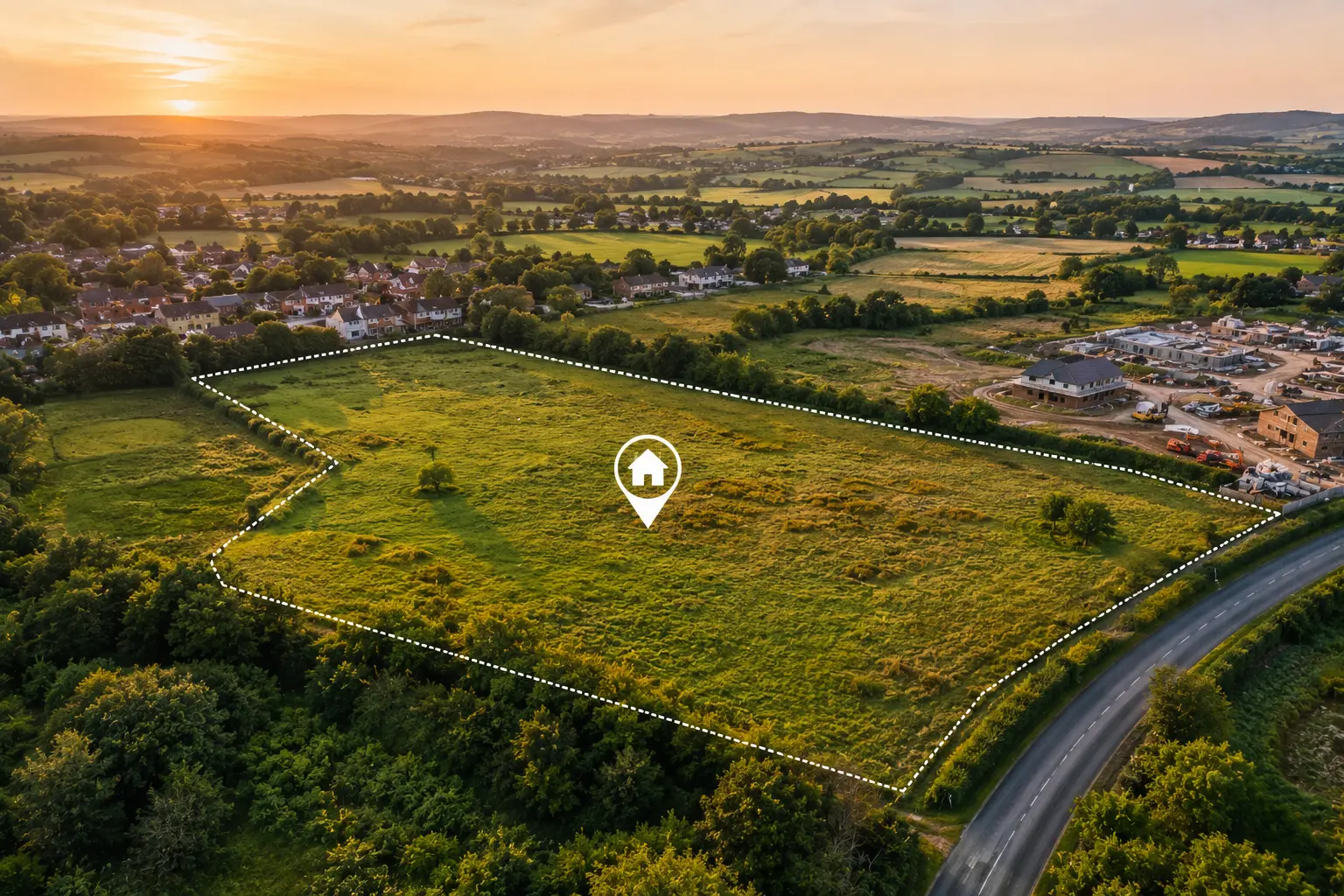
When the Right Plot Becomes Available, Timing Can Be Everything
Land opportunities do not always wait for a perfectly arranged funding package.
A strategic development site may become available unexpectedly. A landowner may want a quick sale. A developer may identify potential that is not yet reflected in the current planning position. In other situations, competition from other buyers can make speed the deciding factor.
For developers and experienced property investors, the challenge is often not recognising the opportunity. It is securing the land before another buyer does.
A bridging loan for land can provide short-term funding to support the acquisition of a site while planning, technical work or longer-term development finance is being arranged.
This can give borrowers greater flexibility at the earliest stage of a development project, when permanent funding may not yet be available.
What Is a Bridging Loan for Land?
A bridging loan for land is a short-term secured facility used to raise capital against land or property with development potential.
The finance may be used to:
- Purchase a development site
- Refinance existing land borrowing
- Secure land ahead of a planning application
- Release capital from land already owned
- Fund a time-sensitive acquisition
- Bridge the gap before development finance is arranged
Land transactions can be more complex than standard residential purchases. A site's value may depend on its planning status, location, access, proposed use and long-term development potential.
As a result, lenders will usually look closely at both the current value of the security and the wider strategy behind the transaction.
Securing Land Before Planning Is Finalised
One of the biggest challenges in development is that planning and finance often move at different speeds.
A developer may identify a site with strong potential but still need to complete surveys, engage planning consultants and finalise a detailed proposal. Waiting until every stage has been completed can sometimes mean losing the opportunity.
A bridging loan can help separate the acquisition from the longer planning process.
The borrower may secure the land first and then continue progressing the development strategy while owning the site.
This can be particularly useful where:
- The vendor requires a quick exchange or completion
- The site is attracting interest from multiple buyers
- Planning work is already underway but not complete
- Long-term development finance depends on planning consent
- The borrower wants greater control over the site's future
Of course, lenders will still require a clear understanding of how the facility will eventually be repaid.
Why Traditional Development Finance May Not Always Be Available
Development finance is usually designed around a defined construction project.
A lender may want to see detailed planning consent, build costs, professional reports, contractor information and a clear development programme before committing funds.
At the land acquisition stage, much of this information may still be evolving.
A bridging loan for land can provide an interim solution where the borrower needs capital before the full development package is ready.
For example, a developer may acquire a site using bridging finance and then refinance onto a development facility once planning permission has been secured and construction costs have been finalised.
This creates a clear transition from land acquisition to active development.
Land With and Without Planning Permission
Planning status can have a significant impact on how a lender assesses land.
Land With Planning Permission
Sites with established planning consent can provide greater certainty around future development potential.
The lender may consider the approved scheme, anticipated gross development value and the borrower's plans for the site.
However, planning permission alone does not guarantee funding. Other factors, including build costs and the proposed exit strategy, will still matter.
Land Without Planning Permission
Land without consent can be more complex.
Its value may be based primarily on existing use, while future development potential may remain uncertain until planning is obtained.
Experienced developers may use bridging finance to secure strategically located land before progressing an application.
In these situations, lenders are likely to look carefully at the current security value, location and the overall strength of the borrower's proposal.
What Do Lenders Consider?
Every land transaction is different.
When assessing a bridging loan for land, lenders may consider:
Location
Sites in established or growing areas with strong demand may be viewed differently from more remote locations.
Planning Position
Existing consent, planning history and future development potential can all influence the assessment.
Access and Infrastructure
Road access, utilities and other infrastructure requirements may affect the viability of future development.
Borrower Experience
For larger or more complex projects, a proven track record can strengthen the overall proposal.
Loan-to-Value
The amount borrowed compared with the value of the available security is a key consideration.
Exit Strategy
Because bridging finance is short term, the lender will want to understand exactly how the facility is expected to be repaid.
Common Exit Strategies for Land Bridging Finance
A realistic exit strategy is fundamental to any bridging facility.
For land transactions, common repayment routes may include:
Development Finance
Once planning permission, costs and construction plans are finalised, the borrower may refinance onto a specialist development finance facility.
Sale of the Land
The site may be sold once planning consent has been secured, potentially increasing its market value.
Sale of the Completed Development
For projects that progress through construction, the bridge may eventually form part of a wider funding structure repaid through unit sales.
Refinancing
A longer-term commercial or investment facility may become available once the land's use and value have been established.
The stronger and more clearly evidenced the exit, the more confidence a lender is likely to have in the proposal.
Why Speed Matters in Land Acquisitions
Unlike a completed residential property, development land may have a relatively small pool of suitable buyers.
However, when a strong opportunity emerges, competition can still be intense.
Developers may be competing with housebuilders, land promoters, investors and other experienced buyers.
A seller may favour the party capable of offering both an attractive price and a realistic completion timetable.
Having access to short-term funding can therefore provide an important commercial advantage.
A bridging loan does not remove the need for due diligence, but it can help borrowers act before long-term funding is fully arranged.
The Importance of Specialist Structuring
Land finance is rarely a one-size-fits-all transaction.
A site may have an unusual planning history, multiple ownership interests or a development strategy that involves several stages.
The borrower may also be using additional property as security to strengthen the funding structure.
Specialist advice can help assess:
- Which lenders may consider the transaction
- Whether additional security could improve the structure
- How the planning position affects available funding
- Whether bridging or development finance is more suitable
- How the proposed exit can be clearly evidenced
For larger transactions, careful structuring from the outset can help avoid unnecessary delays later in the project.
Final Thoughts
A bridging loan for land can provide developers and investors with valuable flexibility when an acquisition opportunity arrives before long-term funding is ready.
Whether the objective is to secure a site, progress planning, refinance existing land or create time for a full development facility to be arranged, short-term finance can help bridge the gap between opportunity and execution.
The most important element is planning ahead.
A strong proposal should consider not only how the land will be acquired, but also how the project will progress and how the bridging facility will ultimately be repaid.
For the right borrower and site, land bridging finance can provide the time and flexibility needed to secure an opportunity without waiting for every stage of the wider development strategy to fall into place.
Frequently Asked Questions
What is a bridging loan for land?
A bridging loan for land is short-term secured finance used to purchase, refinance or release capital from land while a longer-term funding or repayment strategy is arranged.
Can I get bridging finance for land without planning permission?
Potentially. Some lenders may consider land without planning permission, although the available funding and terms will depend on the current value of the security, location, borrower profile and proposed strategy.
Can a bridging loan be used to buy development land?
Yes. Bridging finance can be used to support the acquisition of development sites, particularly where speed is important and long-term development finance is not yet ready.
How is a land bridging loan repaid?
Common exit strategies include refinancing onto development finance, selling the land, selling completed units or arranging another suitable long-term facility.
What security is required for land bridging finance?
The land itself may be used as security, although some lenders may require additional property or assets depending on the overall structure and loan-to-value requirements.
Risk Warning: Bridging finance is secured against property or land and is intended as short-term funding. If you do not meet the terms of the agreement or your exit strategy does not proceed as planned, you could lose the assets used as security.
Information contained in our case studies is for market and illustrative purposes only. In some cases, these may be made up of multiple cases and are for illustrative purposes only. Some case studies are made up of enquiries that have come into the business, not all business completes, and the posting of a case study does not represent a completed piece of business.
We can help you save
Unbeatable bridging finance deals delivered with exceptional service and expertise.
Schedule a CallRelated Insights

£1.2 Million Bridging Loan to Secure Development Land
1st April 2026 | Case Study
A £1.2 million bridging loan enabled a client to secure prime development land quickly while…

£2.4M Bridging Loan Secured for Land Acquisition
9th October 2025 | Case Study
Global Bridging Finance arranged a £2.4M bridging loan in three weeks, enabling a developer to…

Land Bridging Finance: Unlocking Opportunities for Developers and Investors
10th July 2025 | Blog
Discover how bridging finance for land can provide fast, flexible funding for developers and…